Peachtree Corners Townhome Buying Guide for Local Buyers
Dreaming of a low‑maintenance home near great restaurants, trails and year‑round events? If you want upscale convenience without the upkeep of a large yard, a townhome in Peachtree Corners can fit your lifestyle. In this guide, you’ll learn what you actually get in local townhome communities, how HOAs and insurance work, key Georgia contract steps, and how to choose the right location for your day‑to‑day life. Let’s dive in.
Peachtree Corners sits in western Gwinnett County about 21 miles northeast of Downtown Atlanta. The city blends a vibrant Town Center with a growing innovation hub, which keeps demand strong for lock‑and‑leave homes close to amenities. The Town Center is a true focal point with dining, retail, concerts on the Town Green and higher‑density homes that appeal to buyers who want to walk more and drive less. Nearby, the city‑backed Curiosity Lab supports tech employers and smart‑city testing, which adds to the draw for professionals who value short commutes and modern infrastructure.
Across the city you’ll find townhome clusters near Town Center, Technology Park along Peachtree Parkway and gated infill neighborhoods. These locations trade proximity to shops, parks and employers for slightly higher prices versus more car‑dependent areas. If you want a social, convenient lifestyle with less yard work, these communities are worth a close look.
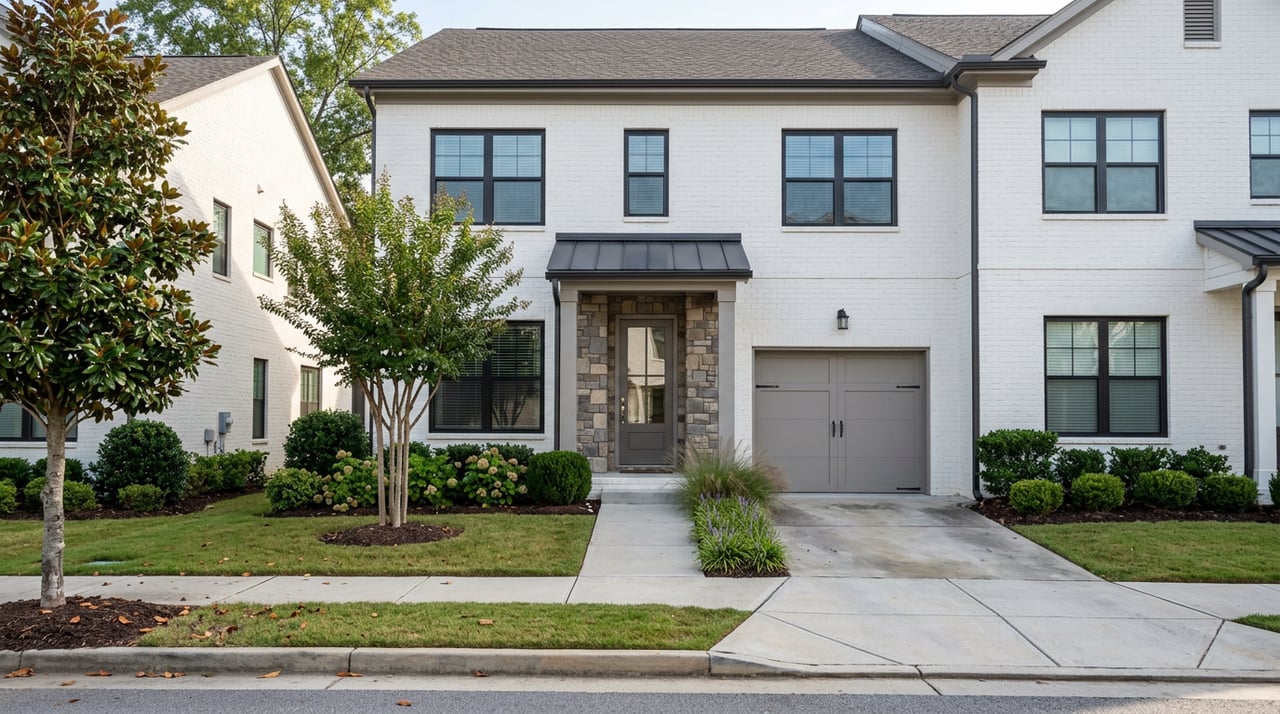
Most Peachtree Corners townhomes are 2 to 3 stories with 2 to 4 bedrooms, 2 to 3.5 baths and 2‑car garages. Many plans put main living spaces on the middle level, with bedrooms above. Some gated neighborhoods offer primary‑on‑main layouts aimed at downsizers. Expect brick or brick‑front construction and energy‑efficient features in newer builds. For a feel of typical designs from national builders, explore townhome floorplan concepts.
Amenities often include gated access, a pool and cabana, sidewalks and small green spaces or dog parks. These features can simplify your routine and create easy ways to connect with neighbors. In return, HOAs with more amenities typically carry higher dues. Some communities also include exterior maintenance in the fee, which is convenient if you prefer a true lock‑and‑leave setup. Builders in the area highlight these maintenance perks because many buyers want less to manage at home. You can see examples of what “exterior included” can mean in builder maintenance outlines.
You’ll see inventory from early‑2000s garden‑style townhomes to luxury infill delivered in the late 2010s and early 2020s. Age matters for budgeting. Older neighborhoods may be closer to roof replacements, paving and pool resurfacing, while newer ones may have higher sticker prices but lower near‑term capital needs. Ask for the HOA build dates, recent reserve study, and any planned projects to understand risk and timelines.
A townhome is a physical style, not a legal ownership type. Your home may be fee‑simple or part of a condominium regime. That difference drives insurance, maintenance and lending.
Always request the HOA’s master policy declarations page to confirm what the association covers, where your coverage starts and the master deductible. Ask your insurer to match the correct policy type and add loss‑assessment coverage when appropriate.
HOA coverage varies by community. Common inclusions are landscaping, amenity upkeep, private street maintenance, common‑area insurance and professional management. Some associations also include exterior building maintenance or lawn service. Others keep dues lower and leave more exterior tasks to owners. To avoid surprises, review the budget, CC&Rs and any maintenance charts in the resale packet. Builders in the area often market “maintenance‑included” features, as shown in these regional maintenance highlights.
A healthy reserve fund matters. Ask whether the HOA has a recent reserve study and adequate reserves for major items like roofs, paving and pool resurfacing. Underfunded reserves can lead to special assessments. For context on how reserve studies work, see this reserve study primer.
Townhomes tend to cluster around the Town Center and along the Peachtree Parkway corridor near Technology Park and The Forum retail area. If you value walkability, the Town Center puts you close to dining, the Town Green and frequent events. Peachtree Corners is roughly 20 to 22 miles from Downtown Atlanta. Actual commute times vary by time of day and whether you use I‑85, I‑285 or Peachtree Parkway. If you split time between home and office, consider access to your likely routes and telework flexibility.
If schools factor into your move, review district resources directly and match options to your needs. Also check any neighborhood rental caps or pet policies if those items are important to you.
If your townhome is in a condominium regime, some lenders require full project approval or a single‑unit approval for FHA or VA loans. Rules can change, so confirm eligibility early in your process. You can review federal guidance on project approvals in the FHA regulations overview. If the townhome is fee‑simple, underwriting often follows single‑family guidelines.
In Georgia, offers commonly include a negotiated Due Diligence Period plus a separate due diligence fee paid to the seller. The Due Diligence Period is your inspection window and runs for a set number of days. You typically have the right to terminate during this window if your contract is written on standard forms. The due diligence fee is often nonrefundable if you cancel, while earnest money is held in escrow and is refundable only if you cancel within the contract timelines and terms. Make sure your agent and closing attorney walk you through the exact deadlines on your contract.
Most local offers include:
For an overview of Georgia due diligence, see these title company guidelines.
While everything is negotiable, many Atlanta‑area townhome transactions follow this rhythm:
Coordinate dates with your lender, inspector and closing attorney to keep the process smooth.
You deserve a home that fits your life and your timeline. Our team pairs local market knowledge with a concierge process that keeps your offer, inspections and HOA review on track. We help you compare communities, read between the lines of HOA documents and coordinate with your lender so you can move forward with clarity. We also offer bilingual support in English and Russian to make every step more comfortable.
If you are ready to explore townhomes near Peachtree Corners Town Center, Technology Park or gated infill communities, reach out. You will get attentive guidance, on‑point comps and a smart strategy from the first showing to the closing table. Connect with Julia Sosa-Rocha to get started.
Stay up to date on the latest real estate trends.
If you are looking for top, proven, passionate agents that you can trust, who will aggressively represent you and your best interests only, who will give you attention & who are passionate about making sure you have an exceptional, positive experience in buying or selling your home, please call us today & we will be glad to help!